Transcription:
Thank you for reading this post, don't forget to subscribe!
Hey, it’s Blon here from the Vortex Healing Center with our Vortex Energy podcast today.
And today I wanted to talk about a book that I was recently highly encouraged to read by Mel Robbins, Let Them Theory. And I’ve heard so much about the book and maybe because it was so popular, I’m one of those people who kind of resists going into what millions and millions of people said was a great great book.
But upon reading it, what really struck me was not just let them let them be, let them have the opinions they want and all of that side, but the correlary to that in the second part of her book is really about let me.
Let me create my own path.
Let me live my life.
And that is really what I want to talk about kind of summarizing the book and how I think this is a great way for you to put into practice how you can live your fullest, deepest, most meaningful life.
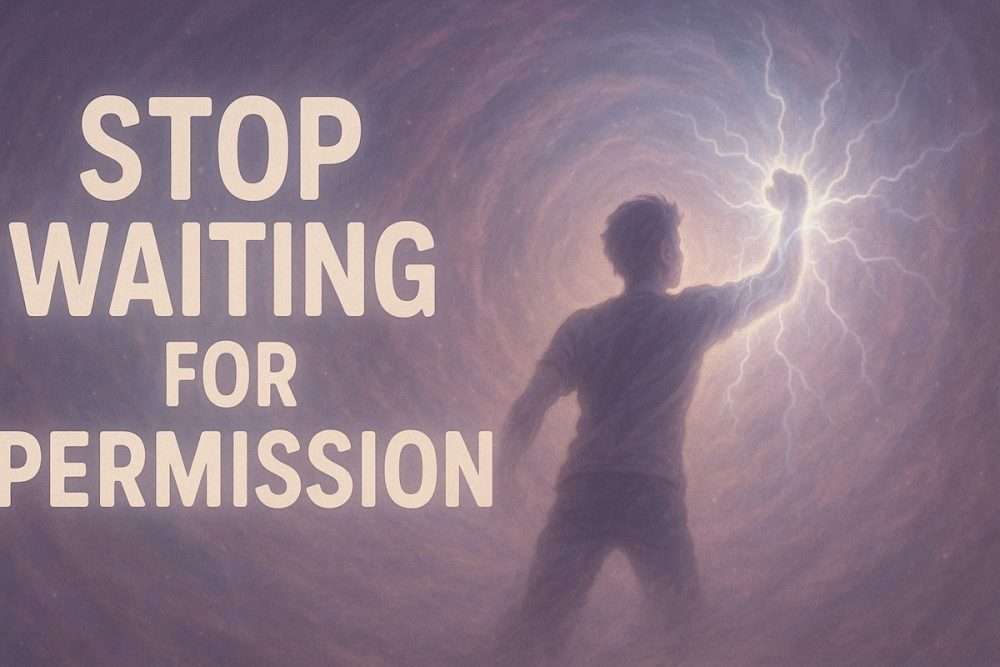
So today we’re going to talk about how you can stop waiting for permission and let the let me path to reclaim your life using inspired by Mel Robbins book. We’re going to go into detail on that as well as a phrase from my friend Mary who says quite often, you be you.
Let them be them.
And that is another key aspect of how I think that encompasses both of those phrases. Let them and let me. It’s expanding your highest self for who and what brings you joy. Okay. The first part is you have to let go of any attachment to anyone else’s whatever judgment thoughts opinions on what it is that you do.
And the second part is expanding who you are, what it is that you want and what and why it’s okay for you to pursue your dreams and your goals. So today, we’re just going to be moving past just letting go and stepping into true selfmastery and being more of who and what you truly are.
We’re going to dive deep into the full equation of the let them theory by Mel Robbins. And we’re putting the spotlight squarely on the second phrase, let me. Those are Mel’s words and they are incredibly powerful. So, let’s look at the let them as the phrase that helps you stop wasting your life trying to control things that are not yours to control.
It’s your mental filter. It creates space.
It’s about letting people be disappointed. Let them misunderstand you or have their own opinions. But if you stop there, you risk disconnecting from your own agency and becoming passive. That’s why the theory is truly defined for me by its second half of “let me. Let me gives you freedom. Let me gives you responsibility and empowerment. It’s the choice to act from a place of confidence and clarity especially when things get difficult. Today we’re talking about how to use let me to build a life that is truly and unapologetically your own. So in the context of selfmastery, the let me aspect is the action step. It’s the commitment to take ownership over your own energy, your own choices, and your future.
Mel shares that the moment she started centering her own needs, she realized something profound. The power of let me is that it shifts the conversation inward. You stop asking why are they doing this? and you start asking what do I need right now?
That is where the healing and actually the momentum takes place. The core realization of this entire path is this. You don’t need anyone’s permission to change your life. You just need your own. For years, you might have been waiting for the right time or for the right someone to validate you. But the truth is, you won’t feel ready. You just have to get tired of your own excuses.
Let me is a call to action.
Instead of waiting for others to fix things, notice you or come around to your way of thinking, you start creating the life you actually want. Think of it as the muscle of selfrust. You build this muscle through small, consistent actions. You don’t need a 10-step plan. You just need to say, “Let me show up for me today.” Confidence isn’t something you were born with. It’s something you earn by doing the things that you were scared to do. Let them doubt. Let me believe.
One of the most important ways we lose our peace is by trying to manage other people’s emotional states. When Mel experienced being gossiped about by friends, her first in instinct was shame and self-doubt. She wanted to fix it and be included again. But then came the let me shift, let them gossip, let them talk, let them misunderstand, but then let me choose how to respond.
Let me decide what kind of friends I want. This is the power of let me in relationships. It allows you to take responsibility for the people you keep in your life. It moves you from chasing people who don’t value value you to walking towards something healthier. This ties directly into boundaries. Mel stresses that boundaries aren’t walls. They are bridges to a better version of you.
Most stress in relationships is caused by what you allow. When you set a boundary, you’re not trying to change someone. You are honoring your space, your you. For example, when dealing with a partner who forgets something important, the old pattern is criticism.
The let me pattern or let them pattern is different. Let them be forgetful. Let them have their own stress. Let me communicate what I need more clearly. Let me make a decision about what I will tolerate. This shift from external focus to internal responsibility transforms relationships. Boundaries are defined by what you need, what you won’t tolerate, and what you will do if the line is crossed. When you stop apologizing for your limits, you stop letting people walk all over you.
The mantra for relationship integrity is let them have their expectations. Let me have my limits. Let me stay grounded. Let me protect my peace. Let me protect my highest self. Because if someone walks away simply because you finally stood up for yourself, you must simply say, “Let them.” You can stand in grace and say, “I release you and I reclaim me.” You know, it can apply to work as well. Work stress often consumes us not because of the tasks but because of our emotional attachment to how we might be perceived and treated. You might be overlooked, underappreciated, or have credit taken.
The old pattern is to spiral into resentment, vent to friends, or quietly stew. The let me approach turns that injustice into fuel. Imagine a manager takes credit for your project. You say, “Let them take the credit. Let them manage poorly.” But then you shift. Let me update my resume. Let me start networking harder. Let me ask for the promotion I’ve earned. Let me make a plan for something better.
This is the essence of intentional action. You can disengage from the drama while still being highly intentional about your next move. This also applies heavily to people pleasing at work. Mel advises, “Stop managing everyone’s emotions at work. Let them be disappointed when you say no.” When a colleague dumped a last minute task on her, one woman in the source, Claire, used, “Let me to take control.” She replied, “Unfortunately, I won’t be able to take this on right now. Let’s discuss a better system next week.” Let me proactive, not passive.
You don’t have to tolerate being overlooked. And you don’t have to spend your emotional energy trying to make broken systems fair. You’re allowed to care deeply about your work and still have boundaries. And if you’re an aspiring entrepreneur, let me is your launching pad.
Stop waiting for more clarity, more time, or more confidence. Let me start. Let me post my first video. Let me begin without permission from anyone else. The work mantra is clear. Let them underappreciate you. Let them ignore your ideas and you let you rise anyway. Let you build something better. The let me framework is also critical for managing our internal landscape, specifically comparison and pain. First, let’s address comparison. When you feel that jealousy or resentment, it’s not a sign you’re behind. It’s a signal, a clue about something you desire that you’ve been ignoring. Instead of shrinking from envy, Mel encourages you to use it as data.
Let them win and let that inspire you to try. You can say, “Let them have the abs, the house, the promotion, and let me figure out what matters to me. Let me use this moment to decide. Do I need to speak up more? Do I need to ask for a raise? Find a better workplace. Comparison stops being a threat and starts being a compass when you embrace the let me principle. Secondly, you must apply let me to pain and healing. When you refuse to feel, you will keep reliving. Pain doesn’t go away if you avoid it. It just shows up later as anxiety, resentment or numbness at some point in the future. The path to healing requires emotional honesty. You must say, “Let them. Let them inflict pain and let me actually feel it.”
Feeling your feelings won’t actually kill you. But if you stop, if you keep trying to shove them down, it actually could kill you. For old wounds, such as feeling unseen in childhood, you can acknowledge it.
Let them be who they were. Let them have lacked the tools. Let it hurt.
You were not wrong for needing more. And now you need to give that to yourself. If you were treated unfairly and are consumed by bitterness, the solution isn’t fighting for justice. It’s release. You say, “Let them be unfair. Let me stay grounded. Let me keep rising.” So self forgiveness is the key to selfrust. You can’t fully step into your power if you’re still punishing yourself for past mistakes. Let me forgive myself. Once you’ve done all of that releasing, the final and most important shift is captured in the boldest mantra.
Let me live my life. Or as my friend Mary says, you do you.
You’re the only one who knows what it is that you truly want. And Mel states that letting them go was never the goal. It was the gateway to fully reclaiming yourself. This is about stepping out of the shadows of people pleasing and self-abandonment. For the burned out mother, it’s not about waiting for the people to notice. It’s about action. Let them expect dinner on the table. Let me take a walk. Let me get back into yoga. Let me choose even for just an hour to be me, to do what I feel I need to do. And this involves five critical let me action steps.
Number one, and these are these are really important, so I hope you’re still paying attention. Let me take up space. Stop apologizing for your voice, your opinions, and your joy. Shrinking doesn’t make you safe. It just makes you resentful.
Number two, Let me rest without guilt. You are allowed to do nothing and still be worthy. Just being is the greatest way for you to bring in your highest self into your current environment, into your current body.
Number three, let me make choices that others don’t understand. You are the only one who has to live with the consequences of your choices.
Number four, let me stop waiting. There is no right time. There is only right here, right now. Let me start that business. Let me write the book. Let me speak up. Let me speak out.
Number five, let me stop being a background character in my own story. Wow, that was a big one. Your future is not outsourced to circumstances, timing, or approval. The only person who can create the life you want is you. You’ve spent enough time trying to be who others needed. It’s time to be who you need. So Mel Robbins path of let them and let me and you be you is not about passive acceptance. It is emotional mastery. It’s the power to pause before reacting and then to choose your next move with courage and clarity. Every time you feel the urge to explain, defend, or fix someone else’s mood, pause. Let them, but immediately follow it with, “Let me choose peace. Let me act from grounded clarity.” You don’t need to control everyone around you to feel in control of your own life. You just need to take full responsibility for you. You are the main character. You need to do you. Let them go. Let you rise.
Thank you for joining this transformation journey. If these lessons resonated with you, subscribe to the Vortex Healing Center for more powerful lessons and tips and methods on how to help you grow, heal, and thrive. Now, go out there and you do you fully, honestly, and unapologetically. See you next time.